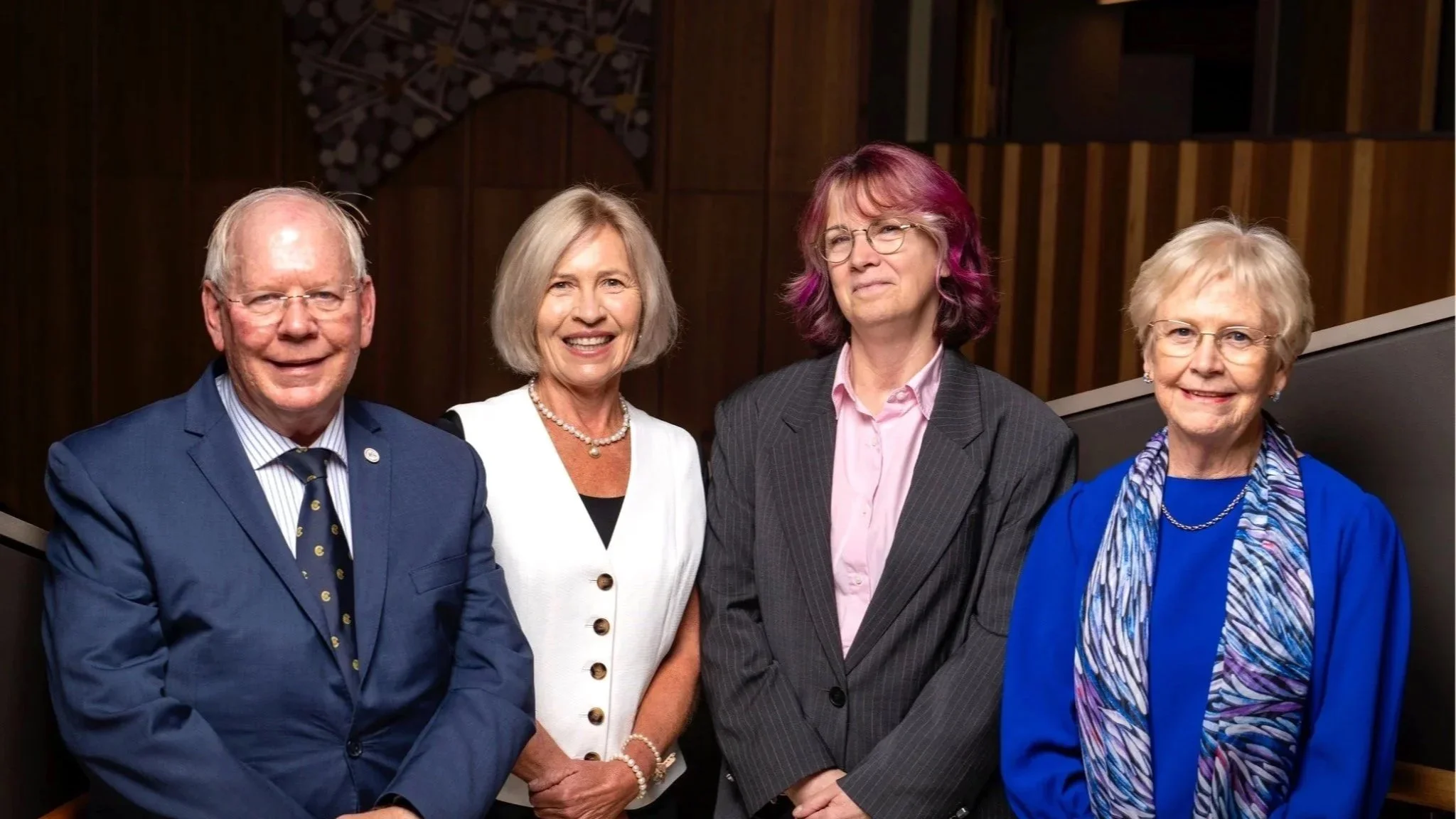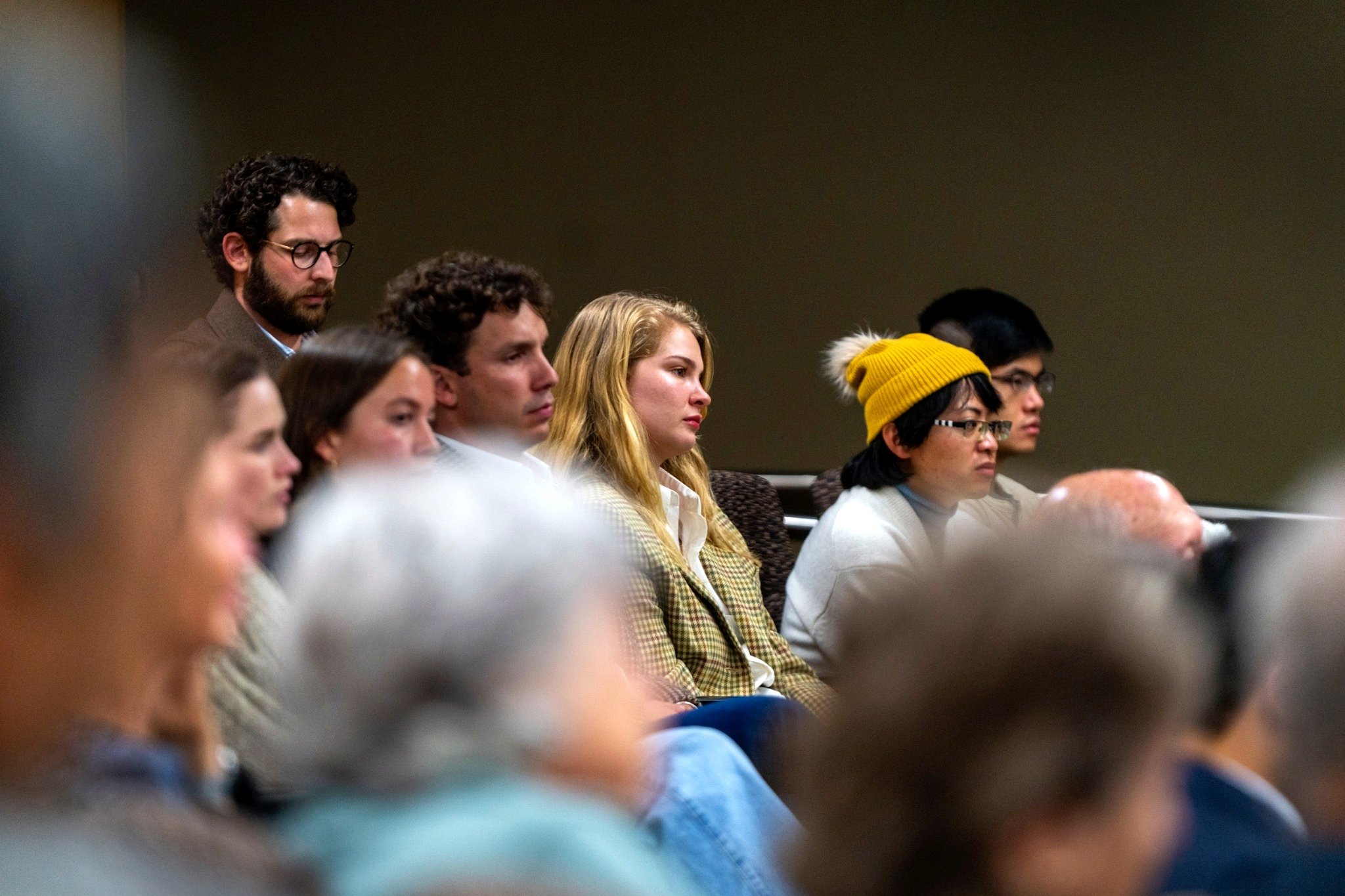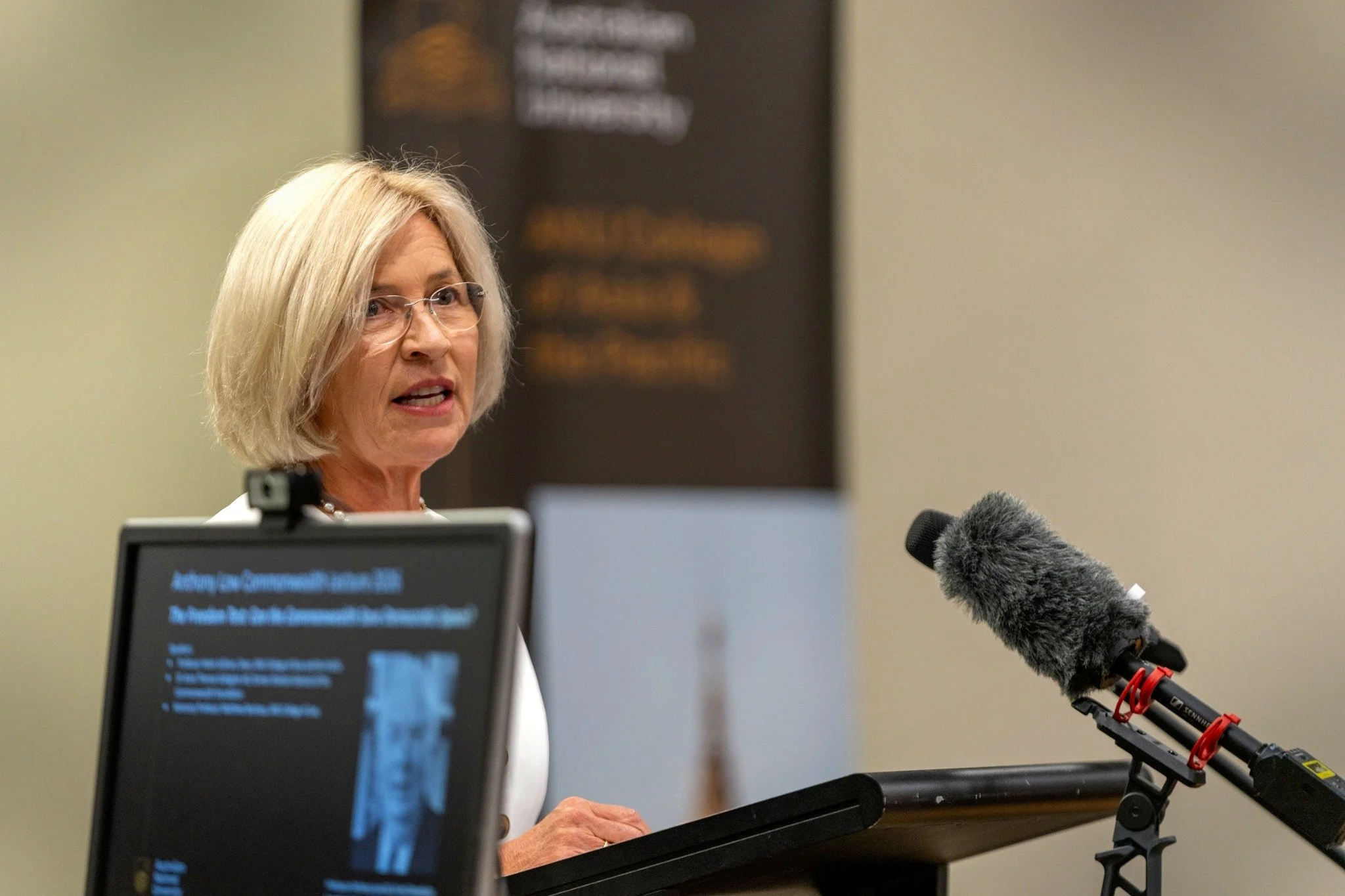
The Royal Commonwealth Society ACT, in partnership with the ANU College of Asia & the Pacific and the Commonwealth Round Table in Australia, recently hosted the 2026 Anthony Low Commonwealth Lecture at The Australian National University. The event brought together diplomats, academics, civil society leaders, students and members of the Canberra community for a timely and thought-provoking discussion on the future of democracy across the Commonwealth.
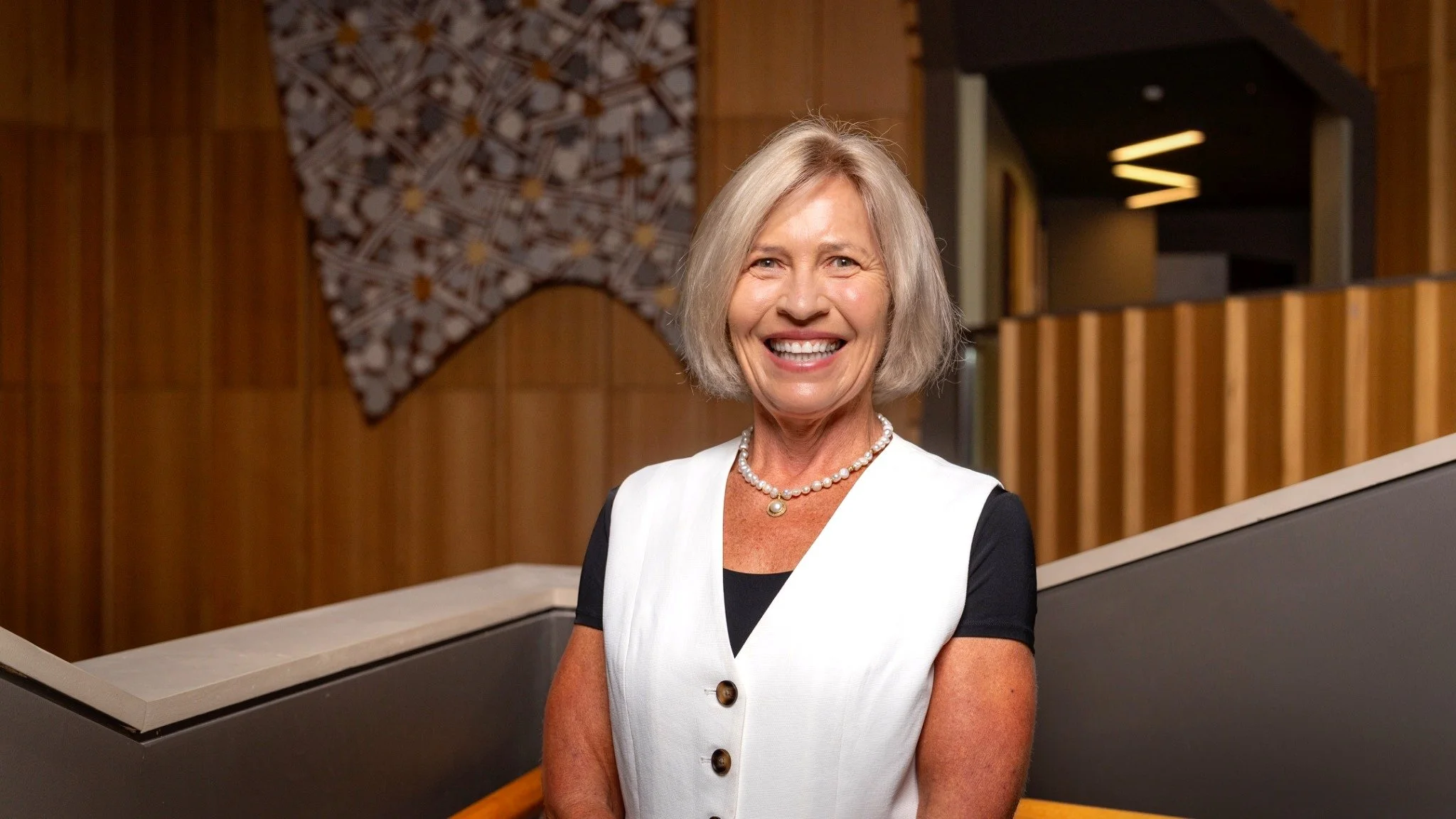
Delivered by internationally respected Australian lawyer and scholar Dr Ann Gallagher AO, the lecture — “The Freedom Test: Can the Commonwealth Save Democratic Space?” — examined the growing pressure facing democratic institutions worldwide and whether the Commonwealth still has a meaningful role to play in defending open civic space.
Dr Gallagher, former Director-General of the Commonwealth Foundation from 2019 to 2025, drew on more than three decades of experience across the United Nations, ASEAN and Commonwealth institutions. Throughout the lecture she argued that democratic decline rarely occurs suddenly, but instead through a gradual narrowing of public space — where journalists face increasing pressure, civil society organisations encounter mounting restrictions, and freedom of expression slowly erodes.
Speaking candidly about the state of democracy globally and within Commonwealth nations, Dr Gallagher described civil society as “the very best indicator of a country’s democratic health,” warning that democratic backsliding consistently involves weakening the voice and influence of citizens.
The lecture explored “freedom tests” facing modern democracies.
Dr Gallagher argued these issues collectively reveal whether democratic space is expanding or contracting within a society.
A major theme of the evening was the unique role of the Commonwealth itself. While acknowledging criticisms of the organisation as a legacy institution, Dr Gallagher argued that the Commonwealth remains distinctive among international organisations due to its values-based framework, extensive civil society networks and support for smaller states, particularly in the Pacific and developing world.
“The Commonwealth is not its governments,” she told the audience. “It’s the people.”
The lecture also featured reflections on the enduring legacy of Professor Anthony Low AO — former Vice-Chancellor of ANU, distinguished Commonwealth historian and namesake of the annual lecture series. In his closing remarks, RCS ACT President Hon Professor Matthew Neuhaus highlighted Professor Low’s lifelong commitment to democratic values, constitutional governance and the evolving role of the Commonwealth in a post-colonial world.
Professor Neuhaus praised Dr Gallagher’s contribution, noting that her work exemplified the “span” Professor Low believed was essential to understanding international affairs — bridging governments, institutions and civil society.
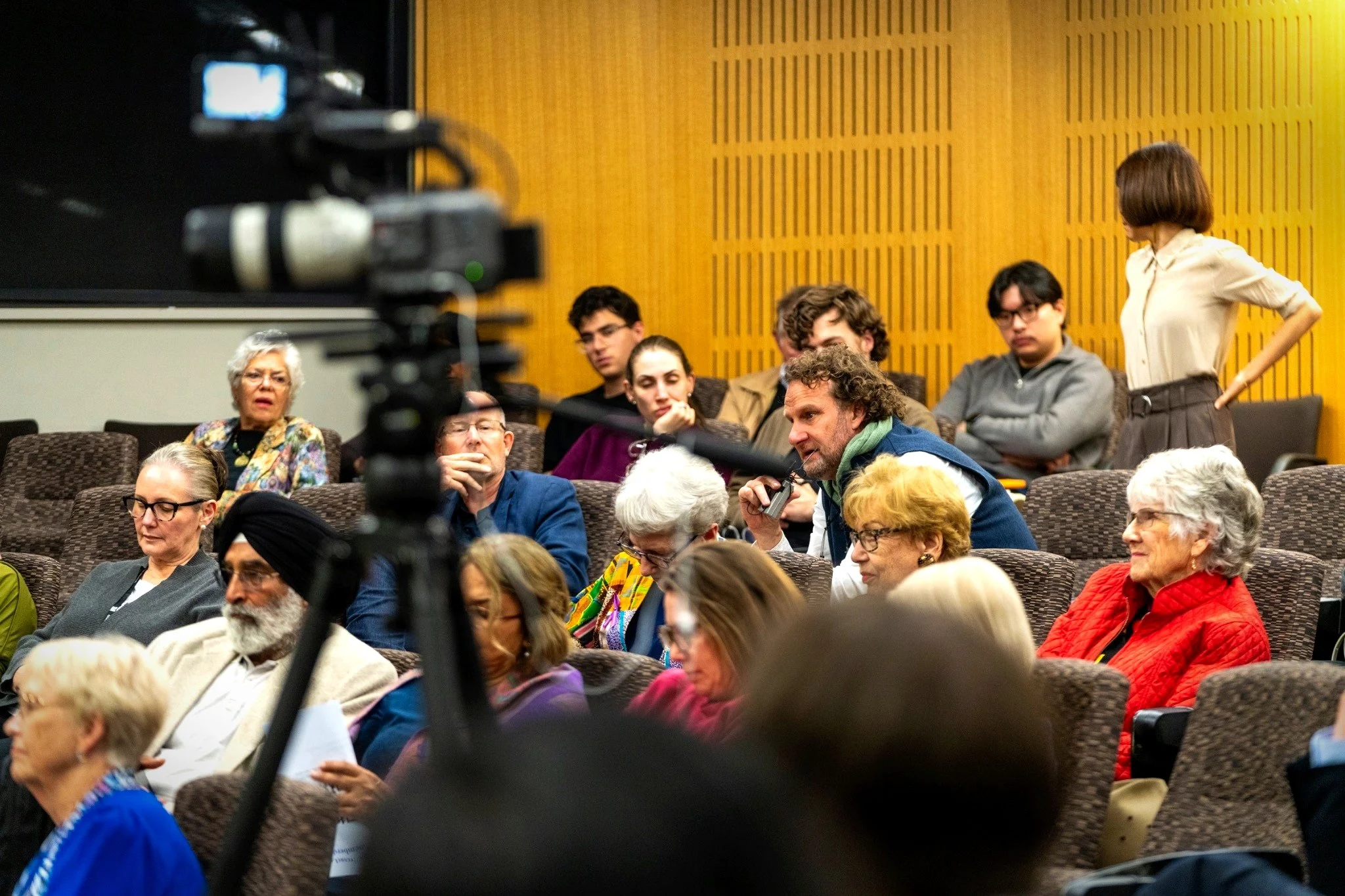
The evening concluded with an extended audience discussion covering the future of multilateralism, the role of middle powers including Australia and Canada, Commonwealth election observation missions, and the importance of protecting democratic institutions from gradual erosion.
The Anthony Low Commonwealth Lecture continues to serve as one of Canberra’s leading forums for discussion on the Commonwealth, international affairs and democratic governance, reflecting the enduring legacy of Professor Low and the continuing relevance of Commonwealth cooperation in an increasingly uncertain global environment.
Report by: Hon. Secretary Michael Keating, Image credit: Jamie Kidston/ANU